
A Florida boating accident can create more than one legal claim when emergency medical mistakes make the injury worse. The boat operator, vessel owner, rental company, marina, equipment manufacturer, emergency medical provider, hospital, or another medical professional may be responsible depending on how each act or failure contributed to the harm. Faiella & Gulden, P.A. helps injured patients and families in Orlando, Winter Park, Orange County, and across Florida evaluate whether an accident case, a medical malpractice case, or both should be investigated.

















These cases often turn on timing. A collision, fall, drowning event, propeller injury, or carbon monoxide exposure may cause the first trauma, while delayed triage, a missed brain injury, medication error, delayed surgery, poor airway management, or unsafe discharge may cause a second layer of harm. Florida law treats boating negligence and medical negligence differently, so identifying the right defendants and deadlines early can make a major difference.
Florida Boating Accidents and Emergency Medical Mistakes: Who Can Be Held Liable? 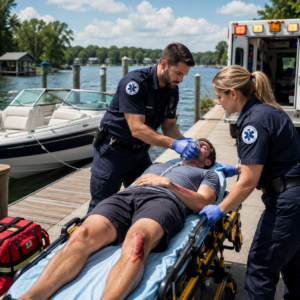
A day on the water in Central Florida can change quickly. Orlando-area families may spend weekends on the Butler Chain of Lakes, Lake Conway, the Harris Chain, the St. Johns River, or coastal waters within a short drive of Orange County. When a crash or water-related emergency occurs, legal questions usually come later.
Those questions can become complicated when the injured person later suffers because emergency care went wrong. A passenger may survive a crash but lose critical time because internal bleeding was not recognized. A child pulled from the water may need immediate respiratory care, but an airway problem may be missed.
How Boating Negligence Can Start the Chain of Harm
Boating accidents are often treated as recreation mishaps, but many involve preventable safety failures. A person or business may be liable when careless conduct causes an injury on the water.
Possible boating-related defendants may include:
The boat operator, if speeding, distracted operation, alcohol use, unsafe turns, failure to keep a proper lookout, or violation of navigation rules caused the crash
The vessel owner, if the owner allowed an unsafe or unqualified person to operate the boat
A rental company, tour operator, marina, maintenance provider, manufacturer, or seller, if unsafe equipment, poor repairs, or inadequate instructions contributed to the injury
Florida boating incidents may also create official records. State boating law requires law enforcement reporting after certain investigated accidents involving bodily injury, death, disappearance, or at least $2,000 in apparent aggregate property damage. Those reports can help identify operators, witnesses, vessel information, location details, and early observations about the cause.
Elizabeth has represented plaintiffs in numerous jury trials since 1976. A member of the exclusive Inner Circle of Advocates, Elizabeth is a legal powerhouse who has been given numerous awards and honors--and she's not done yet. The son of a doctor and an attorney, Peter has a unique and in-depth understanding of all the complicated medical and legal issues involved in a malpractice claim. He has won many 7-figure verdicts for clients since joining his mother's firm in 2004. Allison C. McMillen is proud to be a second-generation plaintiffs’ attorney representing victims of medical malpractice, having practiced with her father, attorney Scott R. McMillen, for over a decade before joining the team at Faiella & Gulden, P.A.
Elizabeth H. Faiella

Peter J. "Tres" Gulden, III

Allison C. McMillen
When Emergency Medical Mistakes Become a Separate Legal Issue
Emergency rooms, urgent care centers, ambulance crews, radiologists, surgeons, nurses, and hospitals are not responsible for causing the boating accident unless they were somehow involved before the injury. They may be responsible for later harm if the evidence shows they failed to meet the accepted standard of care after the patient reached medical help.
Emergency medical mistakes after boating accidents may include:
- Failing to recognize symptoms of drowning complications or aspiration
- Missing a traumatic brain injury, spinal injury, internal bleeding, fracture, or organ damage
- Failing to order needed imaging, labs, neurological checks, or specialist consultation
- Misreading radiology studies or failing to communicate critical results
- Delaying surgery or transfer to a higher level of care
- Giving the wrong medication or dose
- Discharging a patient too soon after head trauma, near-drowning, severe pain, confusion, or unstable vital signs
For readers researching hospital-based issues, the Orlando hospital negligence attorneys page at https://faiellagulden.com/orlando-hospital-negligence-attorneys/ may help explain facility-level failures. If the concern involves delayed testing, treatment, transfer, or surgery, the Orlando delayed medical treatment attorneys page at https://faiellagulden.com/orlando-delayed-medical-treatment-attorneys/ is also relevant.
Who Can Be Held Liable When Both Events Cause Harm?
Florida cases involving both boating negligence and medical malpractice often require a layered liability review. The key question is not only who did something wrong. The more precise question is what harm each defendant caused.
A boat operator may be liable for the initial trauma. A hospital may be liable only for the additional injury caused by negligent emergency care. A physician, radiology group, nurse, or hospital system may also be involved if missed diagnosis, imaging, monitoring, charting, escalation, or discharge failures contributed to the outcome.
Consider a realistic scenario. A passenger falls from a rented boat near Central Florida and strikes her head. The operator was moving too fast in a crowded area. At the emergency department, the patient reports vomiting, confusion, and worsening headache. She is discharged without appropriate evaluation and later suffers a serious brain bleed. The boating defendant may be responsible for causing the head trauma. The medical defendants may be responsible for the worsened outcome if proper emergency care would likely have prevented it.

Shannon McLin
Connie Ashley
Why Causation Is Often the Hardest Part
Causation asks whether negligence made the outcome worse. This is where boating accident claims and medical malpractice claims overlap. Defense teams may argue that the original accident caused all harm. Medical defendants may claim the patient arrived with unavoidable injuries. Boating defendants may argue that later medical care, not the crash, caused the final damage.
Medical records, EMS run sheets, imaging, operative reports, lab results, nursing notes, discharge instructions, and witness statements can help answer these questions. Expert review is often needed to determine the starting injury, symptoms during emergency care, required tests or treatment, whether earlier care would likely have changed the result, and which provider had responsibility at each stage.
Florida Medical Malpractice Rules That May Apply
A medical negligence claim in Florida is different from an ordinary injury claim. Florida law defines a medical negligence or malpractice claim as one arising out of the rendering of, or failure to render, medical care or services. Before filing suit, a claimant generally must complete presuit investigation and notice procedures under Chapter 766, which include notice to prospective defendants and a screening period.
This matters because a boating injury claim may move under personal injury procedures, while the emergency medical mistake portion may require medical malpractice presuit steps.
Florida comparative fault rules can also affect how responsibility is divided among multiple parties. Current Florida law includes comparative fault principles, and medical negligence claims have their own treatment under the statute. A lawyer can evaluate whether fault may be allocated among a boat operator, rental company, hospital, physicians, and other entities.
The broader Orlando medical malpractice lawyers page at https://faiellagulden.com/orlando-medical-malpractice-lawyers/ offers more context on how medical negligence cases are evaluated. The Orlando emergency room error lawyers page at https://faiellagulden.com/orlando-emergency-room-error-lawyers/ is especially relevant when the claim involves triage, diagnosis, monitoring, or discharge after a water-related emergency.
What Evidence Can Help Prove Liability?
Evidence can disappear quickly after a boating accident and after emergency care. Boats are repaired, rental records may change, surveillance footage may be overwritten, and witnesses may become harder to find. Medical evidence can also be difficult to interpret without complete records.
Helpful evidence may include boating accident reports, photos, videos, rental agreements, maintenance records, inspection logs, witness names, EMS records, imaging studies, medication records, discharge papers, damaged gear, and a timeline of symptoms, calls, transfers, and family observations.
Damages in a Combined Boating and Medical Malpractice Case
The damages in these cases depend on the injuries and the proof connecting each loss to each defendant. A claim may include medical expenses, future care costs, lost income, reduced earning ability, pain, suffering, disability, scarring, loss of independence, and other legally recognized damages. If the patient dies, eligible survivors may have a wrongful death claim depending on the facts and Florida law.
Damages may be disputed when there are two phases of harm. This is why expert opinions and a clear medical timeline matter.
The article at https://faiellagulden.com/blog/how-much-is-my-florida-medical-malpractice-case-worth/ may help readers understand the factors that influence malpractice case value.
How an Attorney Can Help After a Boating Accident and Emergency Care Error
A combined boating and medical malpractice case can require two investigations at once. One focuses on what happened on the water. The other focuses on what happened after the patient entered the medical system.
An attorney can help identify all potential defendants, preserve boating and medical evidence, obtain complete records, work with qualified experts, separate original trauma from later preventable harm, handle Florida medical malpractice presuit requirements, and communicate with insurers and defense representatives.
Faiella & Gulden, P.A. represents patients and families in medical malpractice matters throughout Orlando, Winter Park, Orange County, and Florida. The firm offers a free consultation, and the contact page at https://faiellagulden.com/contact/ gives families a direct way to request a case review.
Speak With an Orlando Medical Malpractice Attorney About Emergency Care After a Boating Accident
A boating accident is traumatic enough. When emergency medical mistakes make the harm worse, families deserve clear answers about what happened, who may be responsible, and what legal options may exist.
If you believe a boating injury was worsened by delayed treatment, missed diagnosis, medication error, unsafe discharge, or another emergency care failure, Faiella & Gulden, P.A. can review whether a Florida medical malpractice claim should be investigated.
This article is for informational purposes only and is not legal advice. Consult an attorney about your specific situation.
