
Yes. A delayed stroke diagnosis during Florida summer heat may support a medical malpractice claim when a health care provider mistakes stroke warning signs for dehydration, heat exhaustion, or heat stroke, fails to perform a reasonable neurological evaluation, and the delay causes added injury.
Heat illness and stroke can share symptoms such as headache, dizziness, nausea, confusion, weakness, slurred speech, and loss of consciousness. Hot weather may explain part of what happened, but it should not replace a careful medical assessment. Sudden facial drooping, one-sided weakness or numbness, speech difficulty, vision changes, or loss of balance may require an immediate stroke evaluation.
A poor outcome does not prove negligence by itself. To support a Florida medical malpractice claim, you generally need evidence that a provider failed to meet the prevailing professional standard of care and that the failure probably caused greater harm than you would have experienced with timely diagnosis and treatment.
Faiella & Gulden, P.A. represents patients and families in Orlando, Florida, Winter Park, Florida, and nearby communities throughout the state in claims involving delayed diagnoses, diagnostic errors, and emergency room mistakes.















Stroke Symptoms Require Immediate Medical Attention 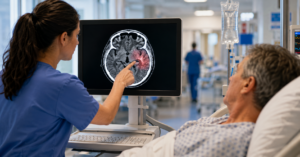
If you or someone near you develops sudden facial drooping, arm weakness, speech difficulty, vision changes, confusion, severe headache, dizziness, or loss of balance, call 911. Do not wait for the symptoms to improve or assume that heat caused them.
Why Summer Heat Can Complicate a Stroke Evaluation
Central Florida heat can affect the first impression of your symptoms. You may arrive at an emergency room or urgent care center after working outside, exercising, attending an outdoor event, or spending time in a building without adequate cooling. Medical staff may reasonably consider dehydration or heat illness.
The concern begins when that first explanation becomes the only explanation. Heat stroke can cause confusion, altered mental status, slurred speech, loss of consciousness, seizures, and a very high body temperature. Heat exhaustion can cause headache, nausea, dizziness, weakness, thirst, heavy sweating, and an elevated temperature.
Stroke symptoms can include:
- Sudden numbness or weakness in the face, arm, or leg, especially on one side
- Sudden confusion or trouble understanding speech
- Sudden trouble speaking or slurred speech
- Sudden trouble seeing in one or both eyes
- Sudden trouble walking, dizziness, loss of balance, or poor coordination
- A sudden severe headache with no known cause
Some symptoms overlap, but focal neurological findings may point toward a stroke. These findings can include facial asymmetry, unequal arm strength, one-sided numbness, abnormal eye movement, vision loss, or speech changes.
You may also experience heat illness and a stroke at the same time. Fluids, cooling measures, and observation may be appropriate, but those steps do not remove the need to reassess persistent neurological symptoms. Fast stroke recognition and treatment can reduce brain damage and disability.
Elizabeth has represented plaintiffs in numerous jury trials since 1976. A member of the exclusive Inner Circle of Advocates, Elizabeth is a legal powerhouse who has been given numerous awards and honors--and she's not done yet. The son of a doctor and an attorney, Peter has a unique and in-depth understanding of all the complicated medical and legal issues involved in a malpractice claim. He has won many 7-figure verdicts for clients since joining his mother's firm in 2004. Allison C. McMillen is proud to be a second-generation plaintiffs’ attorney representing victims of medical malpractice, having practiced with her father, attorney Scott R. McMillen, for over a decade before joining the team at Faiella & Gulden, P.A.
Elizabeth H. Faiella

Peter J. "Tres" Gulden, III

Allison C. McMillen
What You Must Prove in a Florida Malpractice Claim
Florida law requires you to prove that a health care provider failed to meet the prevailing professional standard of care. This standard refers to the level of care, skill, and treatment that reasonably prudent similar providers would recognize as acceptable under the surrounding circumstances.
You must also prove that the breach caused your injury. An injury or unfavorable result does not create a presumption of negligence.
In a delayed stroke diagnosis case, the investigation may address these questions:
- What symptoms did you or your family report?
- When were you last known to be well?
- Did anyone document facial drooping, speech changes, weakness, numbness, visual changes, or balance problems?
- Did the provider complete and document a focused neurological examination?
- Were your blood glucose level and vital signs checked promptly?
- Was brain imaging ordered and interpreted within a reasonable time?
- Was a stroke alert activated when your symptoms warranted one?
- Was a neurologist or stroke-capable facility consulted?
- Were you reassessed after fluids, cooling, medication, or observation?
- Were persistent or worsening symptoms addressed before discharge?
No single missed test automatically proves malpractice. Florida law states that a failure to order, perform, or administer a supplemental diagnostic test is not actionable when the provider acted in good faith and with due regard for the prevailing professional standard of care. The full clinical picture, available information, and expert analysis matter.

Shannon McLin
Connie Ashley
Examples of Possible Diagnostic Failures
An older adult may become confused and unsteady after walking outside in Orlando. Emergency room staff may diagnose dehydration and provide intravenous fluids. If the patient continues to have slurred speech and weakness in one arm, but no stroke protocol begins, a later ischemic stroke diagnosis may raise serious questions.
The legal review would focus on whether the persistent focal symptoms required a stroke evaluation and whether the delay changed the available treatment or outcome.
In another situation, an outdoor worker may arrive with an elevated temperature, vomiting, and altered mental status. Cooling measures may be medically appropriate. If the patient also has facial drooping and unequal strength, the care team may need to evaluate both heat stroke and a neurological emergency. Treating one condition does not remove the duty to assess signs of another condition.
A different case may not support a claim. Your symptoms may have been vague, your neurological examination may have been normal, appropriate imaging may have been completed, and the stroke may not have been reasonably detectable at that time. Medical malpractice depends on the records and qualified expert opinions, not only on the later diagnosis.
How Causation Affects a Delayed Stroke Case
Causation is often the most disputed part of a delayed stroke diagnosis claim. Even when a provider should have recognized a stroke earlier, you must show that the delay probably caused added damage.
Medical experts may compare the care you received with the care you likely would have received after a timely diagnosis. The review may address:
- Whether earlier imaging would have identified an ischemic or hemorrhagic stroke
- Whether you were eligible for clot-dissolving medication
- Whether you were eligible for a procedure to remove a clot
- Whether an earlier transfer to a stroke-capable hospital probably would have improved the result
- Whether the delay allowed more brain tissue to become permanently injured
Treatment depends on the stroke type, symptom onset, imaging findings, bleeding risk, severity, and your medical history. A delay may contribute to more severe paralysis, speech impairment, cognitive changes, longer hospitalization, or increased rehabilitation needs. Your claim still needs reliable medical evidence that connects the delay to those added losses. A possibility alone is usually not enough.
You can learn more about emergency room negligence at https://faiellagulden.com/orlando-emergency-room-error-lawyers/.
Claims involving missed neurological findings may also relate to diagnostic errors. Visit https://faiellagulden.com/orlando-diagnostic-error-attorneys/.
Evidence That May Help Establish What Happened
Stroke cases depend heavily on timing. Records and other evidence may help establish when symptoms began, what providers observed, and when testing or treatment occurred.
Useful evidence may include:
- Ambulance and emergency medical service records
- Emergency room triage notes
- Nursing assessments
- Vital signs and blood glucose results
- Neurological examination findings and stroke scale scores
- Medication administration records
- Imaging orders and scan timestamps
- Radiology reports
- Stroke alert records
- Neurology consultation notes
- Transfer communications
- Discharge instructions
- Electronic medical record audit trails
Family members, coworkers, and other witnesses may help establish when you were last known to be well and when specific symptoms appeared. Phone logs, text messages, photographs, workplace records, or surveillance footage may also clarify the timeline.
Rehabilitation records can document your lasting limitations and future care needs. An attorney may consult experts in emergency medicine, neurology, radiology, nursing, rehabilitation, vocational loss, and life-care planning.
For information about a broader medical negligence investigation, visit https://faiellagulden.com/orlando-medical-malpractice-lawyers/.
Potential Compensation After a Preventable Delay
The damages available in your case depend on the added injuries and losses caused by the delay. A claim may seek compensation for:
- Hospital and physician charges
- Rehabilitation and therapy
- Prescription medication
- Mobility equipment and assistive devices
- Home modifications
- Attendant and personal care
- Lost wages
- Reduced earning capacity
- Future medical and support needs
- Pain, mental anguish, disability, and loss of enjoyment of life
When a delayed diagnosis contributes to death, the estate and eligible survivors may have rights under Florida law. The value and viability of a case depend on the medical evidence, responsible parties, available insurance, prognosis, and legally recoverable damages. No attorney can promise a result from a brief description.
Florida Presuit Rules and Filing Deadlines
Florida medical malpractice claims have special presuit requirements. Before filing a lawsuit, a claimant generally must complete a reasonable investigation, obtain a verified written medical expert opinion that supports reasonable grounds for the claim, and provide notice to each prospective defendant.
After presuit notice is delivered, Florida law generally provides a 90-day investigation period before a lawsuit may be filed. The process gives the parties an opportunity to investigate and exchange information before formal litigation begins.
Florida law generally requires a medical malpractice action to begin within two years after the incident or within two years after the incident was discovered, or should have been discovered through due diligence. A four-year statute of repose generally applies, subject to limited exceptions. Fraud, concealment, intentional misrepresentation, claims involving certain minors, and other facts may affect the deadline.
These deadlines are fact-specific. Presuit investigation and expert review take time, so prompt legal guidance can help protect your rights.
Read more about filing deadlines at https://faiellagulden.com/blog/statute-of-limitations-for-medical-malpractice-in-florida-dont-miss-your-deadline/.
Steps You Can Take After a Suspected Delay
Your health comes first. Continue needed treatment and follow the stroke recovery plan recommended by your medical team.
You can also take these practical steps:
- Request complete records from every ambulance provider, clinic, hospital, imaging center, rehabilitation facility, and treating physician
- Write down the sequence of events while your memory remains fresh
- Record symptoms, conversations, locations, and approximate times
- Preserve medical bills, insurance statements, employment records, travel expenses, and receipts for equipment or home care
- Save text messages, call logs, photographs, and other records that may help establish the timeline
- Avoid changing records or posting detailed accusations on social media
- Speak with a Florida medical malpractice attorney before a filing deadline passes
A legal review can help determine whether the care met the professional standard, whether the delay caused added harm, and which people or institutions may bear responsibility.
Speak With a Florida Medical Malpractice Lawyer
A delayed stroke diagnosis can leave you and your family facing rehabilitation, lost income, long-term care, and unanswered questions about the medical response. Faiella & Gulden, P.A. can review the timeline, obtain relevant records, consult qualified experts, and assess whether the evidence supports a Florida medical malpractice claim.
The firm focuses on medical malpractice matters and offers free consultations to patients and families in Orlando, Florida, Winter Park, Florida, and nearby communities throughout the state.
Call (407) 470-1225 or visit https://faiellagulden.com/contact/ to discuss your situation.
This article is for general informational purposes only. It is not legal advice and does not create an attorney-client relationship. Speak with an attorney about the facts and deadlines that apply to your situation.
